Why Fair Trade Cotton Actually Matters — And How to Know If Your Brand Is Telling the Truth
"Fair Trade." "Sustainable." "Ethically sourced."
These phrases are everywhere in fashion right now. They appear on tags, websites, and Instagram bios from brands selling $8 t-shirts and $80 t-shirts alike. And most of the time, they mean very little.
The uncomfortable truth about sustainable fashion is that it's one of the most heavily greenwashed categories in retail. Brands know that consumers want to buy ethically — and many exploit that desire with vague language, misleading certifications, and marketing that sounds responsible without any of the accountability that should come with it.
This post is about how to tell the difference. What Fair Trade cotton actually means, why it matters beyond the feel-good label, and what to look for when a brand claims to be ethical.
What Fair Trade Certification Actually Means
Fair Trade is not a marketing claim — it's a verified certification issued by independent third-party organizations like Fair Trade USA and Fairtrade International. To carry a Fair Trade certification, a brand must meet strict, audited standards across the entire supply chain.
Those standards include:
Fair wages. Workers at every stage of production — from cotton farmers to garment makers — must be paid wages that meet or exceed living wage standards in their region. Not minimum wage. Living wage — enough to cover food, housing, healthcare, and education.
Safe working conditions. Fair Trade certified facilities are audited for health and safety compliance. No child labor, no forced overtime, no unsafe equipment.
Community premiums. A percentage of every Fair Trade purchase goes into a community fund controlled by the workers themselves — not the brand. Workers vote democratically on how to spend it, whether on schools, healthcare, or local infrastructure.
Environmental standards. Fair Trade certification requires responsible use of water, restrictions on harmful chemicals, and sustainable land management practices.
Transparency. The entire supply chain must be documented and available for audit at any time.
This is why genuine Fair Trade certification costs brands money and requires ongoing compliance — it's not something you can buy with a marketing budget. It requires structural changes to how you source, manufacture, and operate.
Why It Matters More Than You Think
Most people think of Fair Trade as an ethical choice — something that feels good but doesn't affect the quality of what you're buying. The reality is more interesting than that.
The Cotton Farmer Problem
The global cotton industry has a well-documented exploitation problem. Cotton farming is labor-intensive, price-volatile, and dominated by large commodity buyers who have enormous leverage over individual farmers. In non-Fair Trade supply chains, farmers often receive less than the cost of production for their cotton — forcing them into debt cycles that can span generations.
Peruvian pima cotton farming — the source of Regno's fabric — is particularly vulnerable to this dynamic because ELS pima is a specialty crop grown in specific geographic regions. Without Fair Trade protections, the farmers who grow the world's finest cotton can end up among its most financially precarious producers.
Fair Trade certification changes that equation by guaranteeing minimum prices and community premiums that protect farmers regardless of global market fluctuations.
The Garment Worker Problem
Beyond the farm, garment manufacturing has its own documented exploitation issues — from the Rana Plaza factory collapse in Bangladesh in 2013 that killed over 1,100 workers, to ongoing wage theft and unsafe conditions in factories across Southeast Asia and Latin America.
Fair Trade certification in garment manufacturing means the workers who sew your t-shirt are paid fairly, work in safe conditions, and have democratic control over the community premiums generated by their labor.
When you buy a Fair Trade certified t-shirt, you're not just buying a product — you're participating in a supply chain that has been independently verified to treat everyone in it with dignity.
How to Spot Greenwashing
Here's where it gets practical. These are the red flags that separate genuine ethical brands from marketing-first greenwashers:
Red Flag 1: Vague language with no certification. "Sustainably sourced." "Ethically made." "Eco-friendly." These phrases have no legal definition and require zero verification. Any brand can print them on a tag without accountability. Always look for a named, third-party certification — Fair Trade USA, GOTS, OEKO-TEX, B Corp — not just adjectives.
Red Flag 2: Certifications that don't apply to clothing. Some brands display environmental certifications that apply to their packaging or office operations, not their garments. A brand can be a certified green business while its garments are made in exploitative conditions. Read the fine print on what exactly is certified.
Red Flag 3: "We're working toward sustainability." This is the most common greenwashing phrase in fashion. It means nothing is actually certified yet, and there's no accountability for whether the "work toward" ever results in real change. Genuine sustainable brands have certifications, not roadmaps.
Red Flag 4: No supply chain transparency. Ethical brands can tell you exactly where their cotton comes from, who grows it, where it's spun, where it's cut and sewn. If a brand's website has beautiful sustainability language but no specific supply chain information, treat it with skepticism.
Red Flag 5: Suspiciously low prices. Fair Trade certified manufacturing costs more than non-certified manufacturing — by definition, because workers are being paid fairly. A $15 "Fair Trade organic cotton tee" is almost certainly misrepresenting its certifications. Genuine Fair Trade fashion reflects its true production cost in its price.
What Fair Trade Pima Cotton Looks Like in Practice
At Regno, Fair Trade certification isn't a marketing addition — it's a sourcing requirement we built the brand around from the beginning.
Our 100% Extra Long Staple Peruvian Pima Cotton is Fair Trade certified from farm to finished garment. The Peruvian farmers who grow our fiber receive guaranteed fair prices and community premiums. The workers who produce our garments work in certified safe conditions and receive living wages.
The result is a t-shirt that costs more than a fast fashion alternative — and is worth significantly more. The fabric is 100% ELS pima cotton, which means it's softer, stronger, and more durable than standard cotton. The production is certified ethical, which means every purchase supports a supply chain that treats people fairly. And the designs are limited edition, which means when a colorway sells out, it won't return — making each piece genuinely collectible rather than disposable.
You can read more about what makes Peruvian pima cotton the finest cotton in the world in our post Peruvian Pima Cotton vs Regular Cotton: The Real Difference, and learn about what ELS cotton actually means for fabric quality in What Is Pima Cotton? Why It's the Softest Fabric You've Never Heard Of.
The Simple Test
Before buying any "sustainable" or "ethical" fashion brand, ask three questions:
1. What specific certification do you hold, and who issued it? A real answer names a specific third-party certifier. A greenwashed answer uses vague language.
2. Where specifically is your cotton grown and your garment made? A real answer names specific regions, farms, or facilities. A greenwashed answer says "responsibly sourced" with no location.
3. Can I see your supply chain documentation? Genuine ethical brands have this available. Greenwashers don't.
If a brand can't answer all three clearly, their sustainability claims aren't worth the tag they're printed on.
Frequently Asked Questions
Is Fair Trade cotton more expensive? Yes — and that's the point. Fair Trade certification guarantees fair wages and safe conditions throughout the supply chain, which costs more than conventional manufacturing. A Fair Trade certified t-shirt that costs less than $30 is almost certainly misrepresenting its certifications.
What's the difference between Fair Trade and organic cotton? Fair Trade certification focuses on fair wages, safe conditions, and community investment throughout the supply chain. Organic certification focuses on pesticide-free farming practices. They address different things — a cotton can be organic but not Fair Trade, or Fair Trade but not organic. The best products are both.
How do I verify a Fair Trade claim? Look up the brand on the Fair Trade USA or Fairtrade International certification database. Legitimate certifications are publicly searchable. If a brand's certification doesn't appear in the database, it isn't certified.
Does Fair Trade cotton feel different? Fair Trade certification doesn't affect fiber quality directly — but brands committed to Fair Trade are typically also committed to quality sourcing. Regno's Fair Trade ELS Peruvian Pima Cotton is the softest cotton available anywhere, not because it's Fair Trade, but because we wouldn't source anything less for a brand built on quality.
Shop Fair Trade Pima Cotton
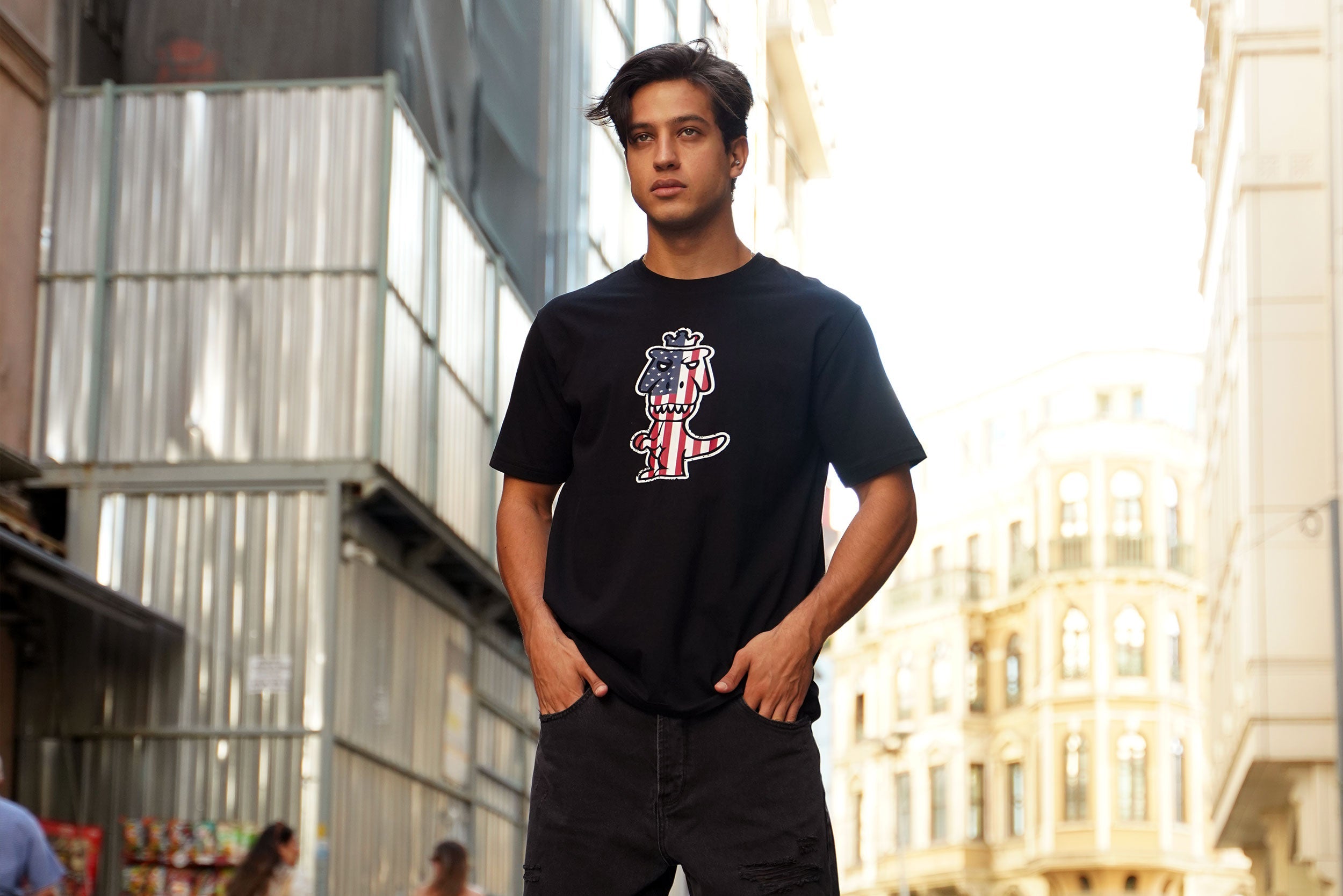
Every Regno T-Rex tee is made from 100% Fair Trade certified Extra Long Staple Peruvian Pima Cotton — the softest, most durable cotton on earth, produced by people who are paid and treated fairly.
Limited edition designs. Free US shipping and returns on every order.

Written by Marcelo Torres